Gripped by Fear
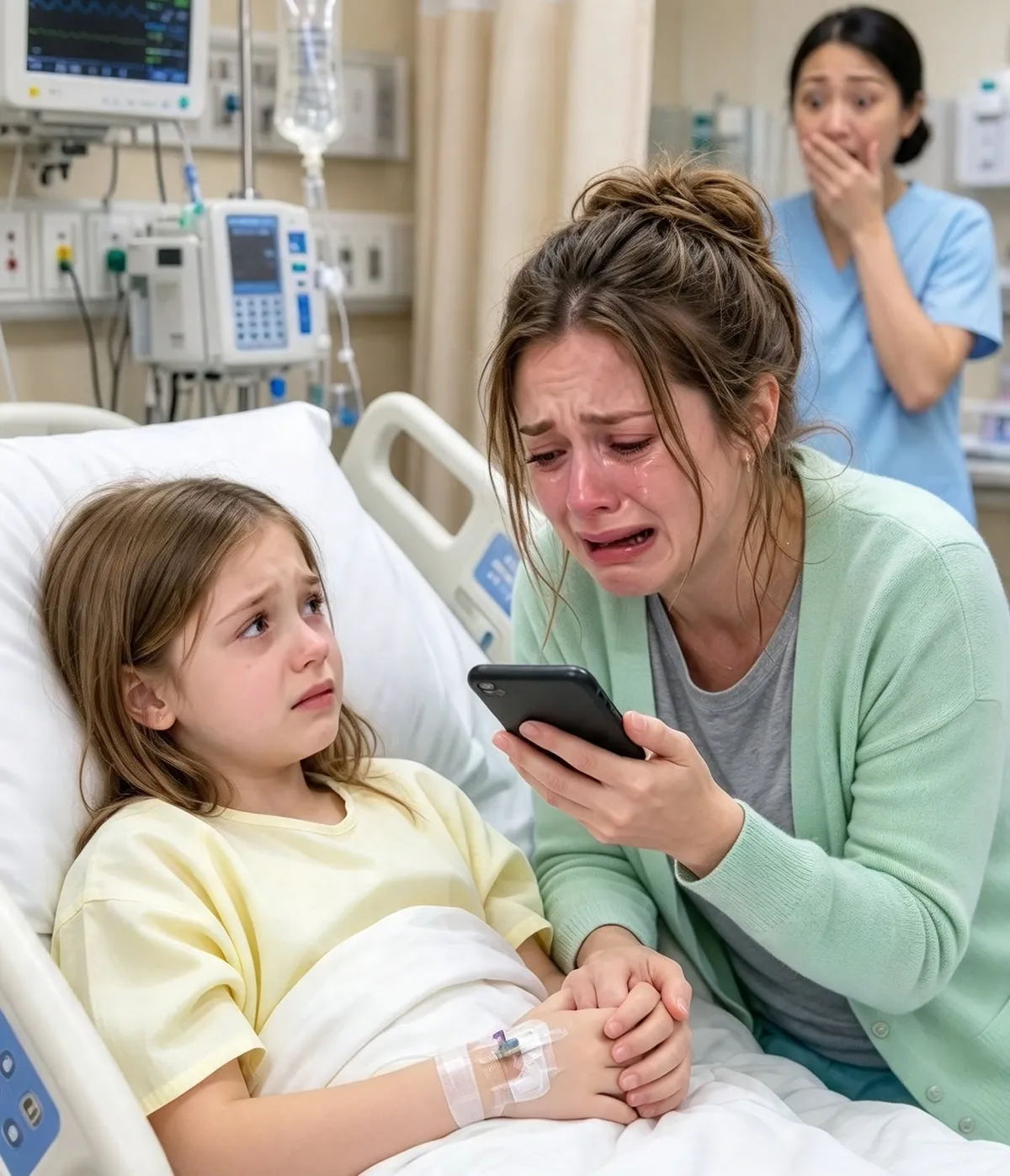
The hospital room was a sterile realm, harsh fluorescent lights buzzing above like a swarm of unforgiving hornets. The air was thick with antiseptic and the faint echo of beeping machines. Each beep seemed to synchronize with my heartbeat, drumming a chaotic rhythm of dread. My ten-year-old daughter, Katie, lay fragile beneath the cover of thin sheets, a fragile tapestry woven from innocence and tragedy. Just hours earlier, she had been a bright whirlwind of laughter, and now, she was a shadow of herself, her spirit flickering like a candle in the wind. The hit-and-run that brought us here had decimated everything she was, and I felt splintering worry gnawing at my insides.
Suddenly, my phone buzzed, pulling me from the abyss of despair. Andrew, my husband—always a voice of reason, or so I thought—was on the line. I glanced at the screen, and my heart sank. Instead of his calming presence, a cold detachment almost seeped through the phone, and then Barbara’s voice sliced through the silence like a razor.
“Come home,” her tone sharp and demanding. “You know what’s expected. My birthday dinner won’t cook itself.” These words hit me with the force of a slap. My pulse raced and rage surged through me. How could she place her selfish whims over the life of my child?
“I can’t just leave her. Katie isn’t well,” I finally managed to say, each word deliberate but barely coherent in my fury. My hands trembled, thumbs hovering over the screen. More than anger, it was disbelief; disbelief that she could demand anything, as if our family wasn’t crumbling under the weight of tragedy.
“I’m sure she’ll be fine,” Barbara continued, her clinical indifference puncturing my already fraying nerves. “You’ve got other responsibilities.”
The line crackled as I held my breath. This was typical, wasn’t it? Barbara’s entitlement pricked at the edges of reason, invading lives that had nothing to do with her. Andrew’s voice murmured from the other end, doing what he did best—defusing tensions with gentle, careful words that felt increasingly hollow. “Just tell her you’ll be home soon. She’ll understand.”
I felt heat rise in my chest. “No,” I shot back. “I’m staying with Katie.” The finality of my words hung in the air, thicker than regret.
When the call ended, a decision weighed heavily on my heart, one that would reverberate through the remaining hours. *What was family?* The burden felt immense, especially when weighed against a life hanging by thread.
The morning light unexpectedly flooded the room, a stark reminder of the world outside. It pooled across the sterile floor like an unwanted intruder. Just as exhaustion threatened to pull me under, I felt a light pressure on my hand. Startled, I looked down to see Katie’s tiny fingers twitching. Her eyes fluttered open, and I saw both weariness and a hint of the spark that had made her so lively.
“Mom,” she rasped, her voice tender yet steady, “Andrew pushed me.”
A chill snaked its way down my spine. Disbelief clawed at my sanity; a mother’s instinct wrestled with the twisted knot of denial. “What do you mean, sweetheart?” I asked, my voice a quivering undertone, heart raced, pulse as frantic as a wounded animal.
“He… He pushed me when I wouldn’t get down from the swing,” she murmured, her brows creasing as if remembering the troubled times momentarily drained her energy. There was a weight—a finality—in her words that sent panic spiraling through me. The innocence of that moment was shattered, relinquishing a girl who had always seen the best in her father.
I swallowed hard, shaky breaths flooding my chest. This was no longer just a hit-and-run; it was an unraveling of a family facade. I pointedly called for a nurse, my heart pounding like a war drum in my chest.
“I need a nurse!” I called out, and as the footsteps echoed swiftly against the linoleum, my stomach twisted in more ways than one. I repeated the urgency in my mind: Detective Reynolds needed to hear Katie’s words, hear the truth woven into this tapestry of family tales long buried in chaos.
Detective Reynolds arrived like a storm cloud; a man with a commanding presence, his visage hardened by a career spent dealing with shadows lurking in alleys, and laughter cut short by violence. He stood by the doorway, silent and imposing, and I felt a curious mix of relief and dread.
“Your daughter needs to talk. May I?” he asked, his grave tone casting shadows over the room’s brittle air.
I gestured weakly, throat dry as I watched Katie’s eyes dart towards me, both terrified and yearning for reassurance. The detective knelt down to her level, his notepad poised in the air.
“Can you tell me what happened, Katie?”
As she recounted the events, her small voice trembled but held a poignant clarity. The detective listened intently, expression implacable, his pen scratching notes with a rhythm that resonated in the subdued tension of the room. Each revelation felt like a ripple disturbing still waters, overwhelming waves crashing against a fragile shore.
When Katie finished, the room fell silent. Detective Reynolds closed his notebook slowly, sealing away her truth. “Amanda,” he cautioned softly but firmly, his eyes narrowing, “do not call your husband.”
The finality in his voice sent a shockwave through me, settling upon the emptiness left behind by the weight of untrustworthiness. My next breath felt heavy as reality set in further. I couldn’t reconcile the child I had known, so effervescent, with the reality that hung before me like a dark cloud hovering, threatening to unleash a storm of revelations.
“Then what do I do?” The words emerged as a choking whisper, suffocating in my throat. My world felt turned on its head—a lighthearted home replaced with shadows of uncertainty.
“Protect her,” he urged. “The truth can sometimes be a hard burden to carry.”
As he said those words, I grasped the enormity of my actions. Could I reconcile the woman I loved with the monster in her skin? Could I shelter Katie from the consequences of the relationships I had once believed were family?
Moments slipped like grains of sand as I contemplated the long hours that stretched ahead. Finally, a surge of resolve surged through me, illuminating dark thoughts as they flickered before fading into nothingness.
I wouldn’t shy away from the dark places that love sometimes led us—portrayed so benignly, cloaked in concern but rooted in control. I gathered my resolve, carrying my daughter’s truth as the banner I would wave, as we’d navigate through life’s chaos together.
The hospital’s sterile silence was abruptly broken with the sound of my heart hammering against my chest, but now it was accompanied by a fierce, soft strength. I wouldn’t be stepping into the shadows any longer. Barbara’s birthday could wait—this was a matter of survival and healing.
And as I sat by Katie’s bedside, cradling her small, fragile hand in mine, a warmth pulsed through me and ignited a newfound ferocity. We had a fight to win—a fight against shadows, a fight for our truth.
In that moment, amid the stark white walls painted by the harsh fluorescent lights, I promised my daughter something far more precious than any birthday dinner could ever offer: the unwavering love and protection she so rightly deserved.