Unexpected News
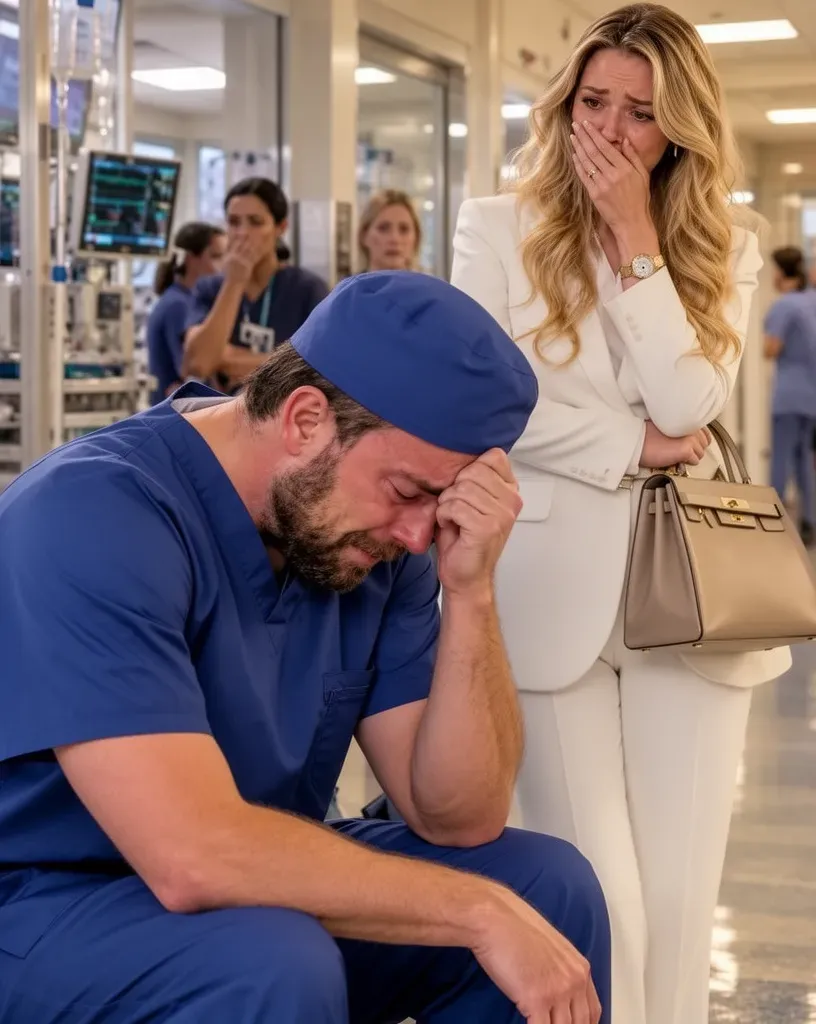
“He’s in surgery,” David finally said, each word falling into an abyss of dread that opened beneath me. My heart, once soaring with hopes of the lunch surprise, now plummeted into despair. “A complex case… it’s taking longer than expected.”
“Longer?” My voice trembled, barely a whisper. “He’s done this a million times. Where is he really?” Panic gripped my throat as memories of countless late nights crept into focus—emergency calls, murmurs of work at the dinner table, and the ever-present absence.
The silence deepened, porous with unspoken truths.
“Layla…” David hesitated, his face lined with concern. “There’s more. He didn’t just miss lunches. He… he collapsed during a procedure last night. He’s been in and out of consciousness since.”
My vision blurred, the world around me distorted as if I were caught in the eye of a storm. I staggered backward, my lunch bag falling to the floor, the contents spilling—the carefully arranged sandwich, the fresh apple, the handwritten note crumpling like my heart.
“Collapsed?” I gasped, my mind racing with horror. “Why didn’t he call? Why didn’t anyone tell me?”
“He—he didn’t want you to worry,” he stammered. “He thought it would pass.”
“There’s a difference between worrying and knowing he could be—” I couldn’t finish the thought. David’s gaze felt like a weight, crushing my chest.
“Let’s go to the waiting room,” he suggested. “They’ll have updates there. You should be with him when he wakes up.”
My feet moved of their own accord as I followed him, each step pulling me deeper into an abyss of disbelief. The fluorescent lights buzzed overhead, illuminating the sterile walls lined with framed photos of smiling doctors and nurses—a facade in stark contrast to the fear clawing at my insides.
As we approached the waiting area, the familiar sounds of the hospital—the distant cries, the soft beeping of machines—seemed ominous, a cacophony underscoring my spiraling thoughts.
David urged me to sit, his presence a heavy reminder of the uncertainty that loomed. I sank into the plastic chair, my hands numb in my lap, mind racing with questions.
“What if he doesn’t wake up?” The thought slipped out, sharp and panicked.
David winced, his eyes darting away as if my words had cut him. “No, he’s strong. He’ll pull through.”
I wanted to believe him, to sink into that comforting assurance, but my heart rebelled. The memories of Marcus—the way his laughter could fill a room, the warmth of his embrace, the soft kisses that could erase a long day’s fatigue—all that felt suddenly distant. Where was he? Why was he putting us through this?
A doctor stepped into the waiting area, face grave and serious, directly opposite the usual warm welcoming demeanor.
“Are you the family of Marcus Finn?”
My heart raced, an erratic drumbeat against my ribcage.
“Yes,” I said, almost breathless. “What… what happened?”
“Marcus sustained considerable physical and emotional stress. He’ll require recovery time and will likely need to take a step back from surgeries for a while.”
“He’s going to be okay?” I pressed. The doctor’s eyes softened, riddled with compassion and concern.
“He’s stable for now, but he’ll be here for at least a few days for observation. We’ll keep you updated.”
“Can I see him?” The urgency filled my plea, my need to assure myself he was alive and breathing centering around the hope I clung to.
“Not yet,” the doctor replied gently, “but someone will come for you as soon as he’s settled in recovery.”
The wait stretched infinitely, my mind spiraling around worst-case scenarios. Somewhere between periodic glances at David, who fidgeted and sighed, my angry thoughts morphed into something far more gut-wrenching: the considered risk Marcus had taken without me, plunging into the depths of his work while I waited, alone.
I sat motionless, mind whirling in quiet chaos. Those dinners I had long blamed on the demands of his job now felt like a betrayal I couldn’t comprehend.
“I should’ve pushed him to talk,” I murmured to David.
“Sometimes they don’t let us in,” he replied softly. “He’s always been driven. That doesn’t make it right, though.”
A tremor ran through my body, the unfamiliarity of pain and anger at having been sidelined surfacing—clenching my fists. “I thought I understood him. I thought we were in this together.”
“And you are…” David attempted to reassure, but his words fell flat.
The clock ticked, each second echoing in the silence. The world moved around me, but I felt frozen, trapped in eternal anxiety and regret.
Finally, hours passed like thickened syrup, and as the sun began to set, washing the waiting room in warm hues, someone appeared—a nurse wearing a welcoming smile.
“You can see him now,” she announced, waving for me to follow.
With trepidation coursing through my veins, I stepped into the dimly lit hallway, the cleanliness of the sterile area preventing my stomach from settling. Each step felt heavy until I reached Marcus’s room.
I inhaled sharply, and then opened the door.
There he lay, propped against the pillows, eyes closed, face pale but peaceful. The sight was both a relief and a new wave of fear washed over me—this moment was real, tangible, and terrifying.
“Marcus?” I murmured, moving closer.
He stirred slightly, his lids fluttering open.
“Layla?” His voice was raspy, tinged with confusion.
“Hey, it’s me,” I choked out, rushing forward. “I brought you lunch.” The words felt trivial, stupid even, but I needed him to know I was there, a piece of our life waiting in the room with him.
“Lunch?” He squinted in the bright light, trying to piece together the bits of memory that felt lost.
“There’s so much to talk about,” I whispered, everything I had bottled up fighting to surface. “Where do we even start?”
Marcus’s struggle to sit up made me rush to his side. He winced but managed a weak smile. “How did I get here?”
“David said you collapsed. You’ve pushed yourself too hard,” I replied tightly, wrapping one hand around his. “You need to let me in, Marcus. You need to let me help.”
“Help?” he echoed, uncertainty flaring in his gaze. “I thought…”
“No,” I pressed, feeling hot tears brim. “You thought you had to carry it all. We—this family—this is us, and you don’t have to do it alone. I miss you.”
The gravity of the moment swallowed us, his breath hitching as he processed my words. The barriers that had built over the year—the long nights and empty beds—started to fracture.
“I’m sorry,” he rasped, eyes glistening. “I thought I could manage.”
“Marcus, you can’t just manage. You need to talk. If not to me, to someone,” I insisted, squeezing his hand tighter.
“I’ve kept so much to myself,” he confessed, the tremors in his voice reflecting a raw honesty breaking through. “I didn’t want to worry you.”
“No more secrets,” I declared firmly. Every missed dinner, every holiday without him—it halted my breath. “You don’t have to shoulder this weight alone anymore.”
He sighed, the weight of the world visible in his weary expression, a thread of vulnerability overlaying the façade he had worn for so long.
“I need you,” he finally whispered, voice trembling. It was so small, so fragile, yet it echoed with painful clarity through the sterile walls.
As we sat there, hands intertwined, I recognized that the hardest battles often weren’t fought in the operating room but right here, in the heart of our home. The path ahead would not be easy, but there was hope—a flicker of light pushing us forward.
Together, we would bridge the chasm created by silence, building a sanctuary of open hearts and shared burdens. No longer side by side in separation; instead, battling the world shoulder to shoulder.