Unearthing the Past
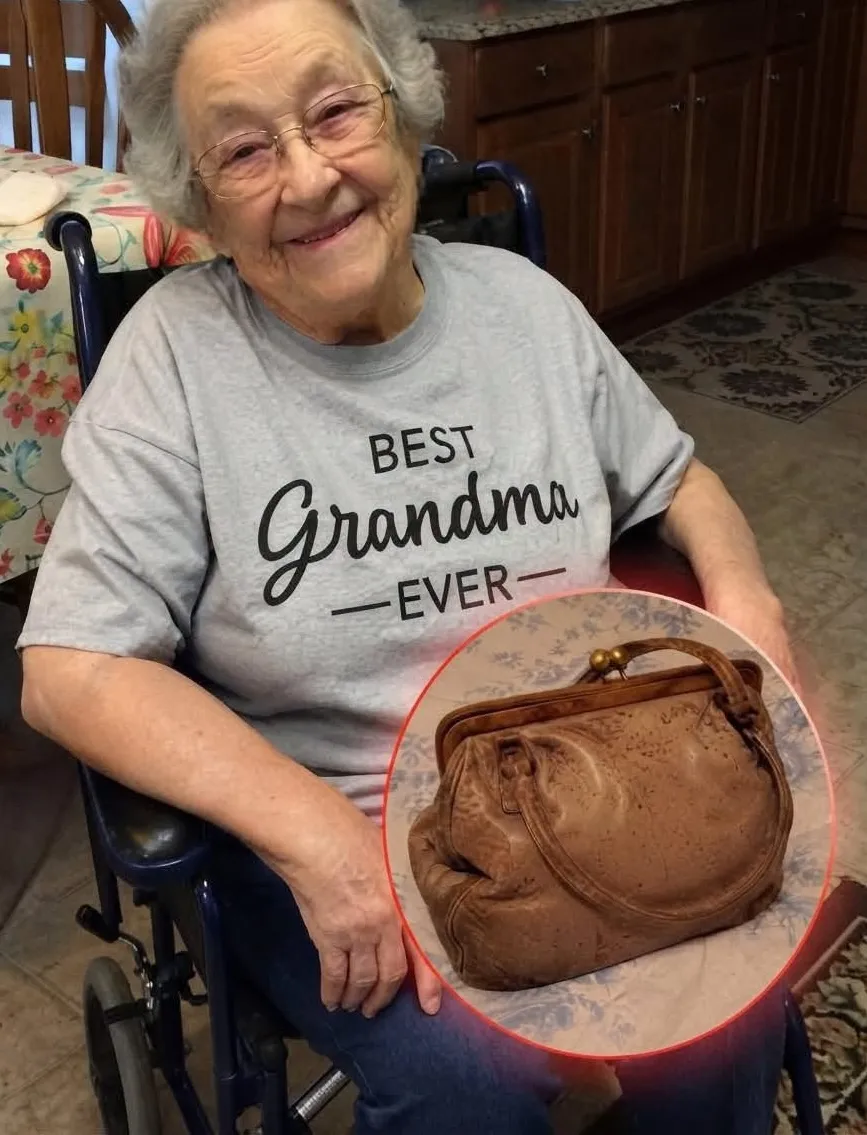
My pulse raced as I peered into the depths of that enigmatic handbag, the faded leather cool against my palms. I had always assumed it was merely a relic of Grandma’s days, stuffed with old receipts and possibly a candy or two hidden away for a rainy day. But what I found within was beyond anything I ever imagined. It wasn’t jewels or money. It wasn’t family heirlooms or letters from a forgotten love. No, what lay inside was a stack of photographs—decades of captured moments with family, friends, and celebrations we never knew about.
The images were a dizzying mosaic of black-and-white and colorful snapshots, their edges frayed with age. There was Grandma, young and full of life, at a picnic in the park, her smile infectious as she tossed crumbs to gray squirrels. Another photo showed her standing in front of a modest house, a ribbon-cutting ceremony featuring a “Welcome Home” sign above her head. I had never seen that house before; it must have been a time before grandpa, or perhaps before the world we knew had settled into patterns of sameness.
Nestled among these was a diary, its leather cover embossed with intricate patterns. The moment I touched it, I felt a spark of connection, an otherworldly pull that urged me to pry it open. The contents left my mouth dry. Grandma’s life, it seemed, was a tapestry woven with secrets. Each page was a window into her private world, the battles she’d fought alone, the victories uncelebrated but monumental.
“I never wanted you to worry,” she had written in careful cursive, pausing as if fighting back tears. “There were choices I made, things I did to protect you all from the weight I carried.” How could I have known? I hadn’t seen those scars. To me, her life had been a flawless weaved portrait of warmth, laughter, and Sunday dinners filled with love.
Yet, even through the revelations, her unwavering love for us all shone clear. Each word was a testament to her fierce loyalty. “You must promise to live a life without secrets,” she had urged with an underlying urgency in her prose, as though demanding more from us, her legacy. The irony curled in my gut. Here I was, uncovering layers of her past, holding her secrets in my hands like fragile glass, vulnerable yet stunningly beautiful.
Tangled within these pages was something more—a document clubbed together with a ribbon, fragile yet potent. My breath hitched. As the enormity of what I held sank in, a spine-tingling chill ran through me. Carefully, I untied the ribbon, my fingers trembling slightly from anticipation or perhaps trepidation. Was it a birth certificate? A marriage license? No, it was something stunningly significant, a resolution to mysteries we’d never even thought to question.
I fanned the document open, my mind racing. It was a legal notice from an attorney’s office, dated more than twenty years ago—a will that named names, including my own. My family’s names scrawled across the page as heirs to something incomprehensible.
“What do you know about the Whitmore estate?” Grandma’s words echoed in my mind, part of a fleeting conversation during one of our Sunday dinners, where the only drama we nurtured was untangling the history from seconds on our plates.
The Whitmore estate. My heart raced. It had mysteriously vanished from family discussions after one summer where whispers and side-glances filled the air like smoke. The grandeur of that estate was closer to legends than reality in my mind, tales of sprawling gardens and rooms filled with antiques. I’d dismissed it as an immovable ghost of our family history, but now, it seemed Grandma was holding onto it like a lifeboat in a storm-tossed sea.
A knot formed in my stomach. Why had she kept it hidden all these years? Why were there no thrilling stories to accompany this substantial revelation?
As I stood there grappling with the truth, an overwhelming sense of dread swept over me like a cold wind. How would I ever explain this to the family without unraveling the peace Grandma had so carefully cultivated? The warmth of Sunday dinners, the shared laughter, and the feeling of belonging—they could all shatter into fragments beneath the weight of this new knowledge.
I could almost hear Aunt Judy’s shrill voice, her delight in gossip rising like a crescendo when exposed to shocking news. It would spread like wildfire. “Did you hear what Emily found?” She would be relentless in her pursuit of every detail, every tiny fragment of our family’s history to twist and fold into her narratives.
“Family is everything,” Grandma would remind us, her eyes glistening with a fierceness that demanded we honor our bond. But would revealing the truth of her past honor her wish, or break apart our own families in the process?
I had to think. I couldn’t unravel these threads alone. Not with my family divided over a news piece they’d never expected to inherit. If I told them everything, could we unravel the hidden and stitched pieces together, or were we destined to fracture like old wallpaper with a careless tug?
Another photograph slipped from the diary, landing softly on the ground. I froze, squatting to examine it more closely. It was of a small boy. A boy who looked alarmingly like my father but significantly younger. The quiet smile he wore seemed to hold secrets I had yet to understand. Beneath it scrawled in Grandma’s loopy handwriting were the words, “My first heart, my wish for more.”
A heavy silence enveloped the room as I clutched the diary, my mind racing back through memories of Grandma. She was a fortress, her walls impenetrable. Had I only seen the surface? Had I never asked the right questions, or looked closely enough?
The looming shadows of secrets hung around me, but so did the comforting warmth of her love. For every moment I had shared with her and all her smiles, deep down, there was an essence that whispered of strength and sacrifice.
My knees trembled slightly as I pushed myself up, the diary secure against my chest. I had to make sense of this—of everything she had given me to find. I owed it to her not just to tell my family about the estate but to guide them through the unraveling, to articulate every inch of the life she had led.
Abandoning the potential chaos that might follow, I sensed a surge of determination. “I’ll sort it out,” I murmured to the empty room. “We’ll figure this out together, no secrets.”
As I walked to the kitchen, I placed the diary down on the table. I made a promise to myself amidst the scent of garlic and warmth. The truth was finally visible, but how I chose to share it was where my journey would truly begin. The process wouldn’t just be about revealing secrets; it would be about weaving understanding and gratitude into the fabric of our family’s tapestry, an honor to the woman whose love—and now secrets— had shaped us all.
I took a deep breath, the air rich with the scent of impending change hanging around me like a heavy cloak. None of this would be easy, but one thing was abundantly clear—family had its complexities, and now, more than ever, I was ready to dive into the depths of our hidden legacy.