Artyom stared at Nikolai, apparently taken aback by the question, his cheeks turning a shade of crimson that sharply contrasted with his previous confidence. Katya, shifting in her seat, began to fidget with the edge of her stylish handbag, a sign that her father’s bluntness had thrown her off balance. Valentina shot Nikolai a look that screamed ‘not at the dinner table!’ but Nikolai held his ground, expecting Artyom to rise to the occasion.
“That’s quite the question, sir,” Artyom began, his voice slightly faltering. “I, uh, I admire Katya’s independence. She’s driven, smart, and… well, she’s beautiful, of course.”
Nikolai pursed his lips, watching the young man closely. “Independence, yes. But behind every independence, there’s a level of understanding,” he replied, his tone even. “I’ve seen too many families where the bonds fray because one partner doesn’t understand the other’s roots.” He let the words sink in, the tension in the air thick enough to cut with a knife.
“I understand her roots perfectly well,” Artyom replied, forcing an awkward smile. “I mean, I admire her background, her upbringing. That’s all the more reason I want to be with her. She… she brings balance to my life.”
This response seemed rehearsed, and Nikolai leaned back, a frown deepening on his brow. It was clear that Artyom wasn’t used to dealing with direct inquiry. But then again, a man accustomed to soft city pleasantries won’t thrive in the rawness of country life, he thought.
Katya, her brows knitted with discomfort, intervened. “Papa, that’s enough. We’re not here to grill him. Let’s just enjoy dinner. Right, Artyom?” She smiled at him, an attempt to alleviate the situation.
“Absolutely,” Artyom replied, visibly grateful for her support.
Valentina, eager to diffuse the tension, chimed in, “What do you like doing in your free time, Artyom? Any hobbies?”
Artyom seemed relieved by the change of subject. “Oh, I’m quite passionate about gaming,” he said, his enthusiasm returning. “I generally spend my weekends at home, playing games. It’s a good way to unwind after a crazy week.” He glanced at Nikolai. “Do you play? It’s a big thing these days!”
Nikolai merely shook his head. “I’ve no idea what you’re talking about, son.” The exchange further emphasized the divide between their worlds—between the man who could mend engines and plow fields and the one accustomed to lounging on a couch, fingers locked in battle with digital monsters. Nikolai caught Valentina’s worried glance and continued eating his dumpling, chewing more than he needed to, relishing the familiar taste while suppressing his rising frustration.
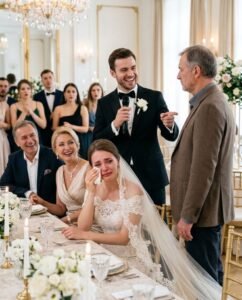
Rising Tensions
As the meal progressed, Artyom resumed his description of work, his voice peppered with excitement as he spoke about the fast-paced world of technology and entrepreneurship. Valentina and Katya listened intently, entranced by the allure of city ambitions as he wove images of innovative minds creating the impossible. But the more Artyom painted these pictures, the more Nikolai felt his daughter drifting further away, as if she were moving into an entirely different realm.
“And investing in this tech startup is just the beginning—who knows where we could end up?” Artyom said, polishing off his plate.
“Is investing what you do?” Nikolai asked, pushing the remnants of fish pie to the side. “What would happen if it doesn’t pan out? No one around here asks what you’ll do when things go south,” his voice dropped, saturated with the rural assurance that only life among the winds and trees could provide.
The air grew thick once more, and a flicker of irritation crossed Artyom’s features. “Well, everyone’s a bit risky in business, Mr. Morozov. It’s calculated risk.” He ran a hand through his perfect hair. “With the right algorithms, you’re bound to succeed.”
Nikolai scoffed unintentionally, a raspy sound that broke the heavy silence. “Algorithms? You can’t plant seeds and watch them grow into algorithms, boy.” He leaned into the tempo of their conversation. “Most folks would’ve not had a dinner like this just to earn some risk. Some of us work years to secure what little we have.”
Artyom stiffened, a clear sign that Nikolai had grazed a sensitive spot. “Well, not everyone has the same opportunities or experiences, Mr. Morozov,” he shot back, the warmth in his tone evaporating. The table surged with a deeper discomfort, the unspoken differences gnawing at the edges of their initial charm.
Caught between two worlds, Katya’s smile faltered, her easygoing nature swallowed by the rising tide of tension. “Let’s not ruin dinner over such things,” she said softly, her soothing tone attempting to rally a sense of civility.
But Nikolai wasn’t ready to relent that easily, emboldened by years of hardened experience and patience crafted in the fields. “I just want you to understand the life you might be stepping into, Artyom. It’s not just about success; it’s about roots, family. It’s a symbiosis that makes it whole. You can’t function well in a body without considering every part of it.” His words hung suspended in the air, laden with wisdom from a life spent engaging with the very earth.
The Clarity of Understanding
The silence that followed felt like a wound, deep and festering. Artyom shifted, glancing toward Katya who was still wide-eyed. It was a crossroads moment, where the influence of a father weighed heavy against the spontaneous affection of youth. A gust of wind rustled the recently uncovered garden outside, adding to the stark reminder that their lives were dictated not only by passion but by circumstance.
Finally, Artyom stood, attempting to gather himself, hands tucked deep into his pockets. “I see your point, I really do, and I appreciate your concern, Mr. Morozov. But things are different now—you have to adapt to the different pace of life, the changes that come with it.” He motioned towards his phone. “These days, people are spending less time glued to nature and more behind screens for opportunities.” He turned his gaze back to Katya, “That’s what I meant with technology—it’s about embracing where we are heading, not where we’ve been.” He hesitated, swallowed hard. “I truly care for Katya, but I can’t promise to decline the world I am a part of.”
Katya, for her part, looked between her father and her fiancé, her heart writhing in pangs of inadequacy. The moment stretched taut, and as their eyes clashed, the connections of a budding fiancé—fiancé materialized into reality, magnified beneath her father’s scrutiny. She took a deep breath, the kind of breath that marks decisions—an unconscious muscle memory trained by years of navigating heated discussions.
“Papa,” she finally said with quivering resolution. “Artyom’s right in some ways. The world is changing. I’ll always cherish these lands and everything we’ve built here, but I need to forge my own path—even if it’s different from yours.” Her voice was steady now, filled with the gravity of newfound independence.
In that moment, Nikolai felt the familiar ache of a father needing to let go. The weight of it hard to articulate, but he sensed it pressing against his chest like an uninvited guest. His daughter was growing, evolving beyond the confines of earth and tradition, stepping into the unknown.
Yet the rugged reality of their lives remained—hard-earned lessons interwoven with familiar tenets that refused to escape his mind. This was his heart speaking, reflecting how deeply he cared to anchor her in the steady soil of rural life.
A Fork in the Road
With Artyom standing awkwardly near the edge of the house, Katya approached him, drawn to him with an emotional tether almost tangible in its strength. “Let’s take a walk outside?” she suggested gently, her tone light yet urgent.
He nodded, grateful for the reprieve, and as they stepped onto the porch, Nikolai felt a sense of finality settle into the air. His daughter, standing close to this polished stranger, seemed both foreign and familiar. And though the last vestiges of innocence seemed to be shedding like autumn leaves, Nikolai didn’t feel anger—only a stinging sense of loss.
Valentina squeezed his arm, her voice soft. “You know, Kolya, maybe they’ll find their way back. Kids’ lives evolve just as we did.” She smiled, encouragingly, seeking to reassure him.
Nikolai sighed, taking his chair again to look out at the twilight cloak wrapping around the village. The horizon of their lives now intersected with their daughter leading another path, one he no longer had control over. It was both discomforting and liberating at the same time. Often, he had wandered the fields, digging into the soil for a solid connection while being unable to protect what might sprout and thrive. But perhaps now it was time to trust in her own journey.
They were outside now, undeterred by the fading light. Shadows danced as Katya and Artyom gradually melted into the scenery. And in that dimming warmth, Nikolai understood that as much as roots grounded the family, it was the dreams blossoming beyond those roots that kept life ever expanding. What if Artyom was the one, after all?
Nikolai stood, a man resigned to the unpredictable. He had weathered many storms in life—farmlands flooded or barren, seasons changing just as abruptly as his daughter was changing—to find contentment in finally letting go. He counted himself fortunate for the moments that had shaped them; tight and shared in the nuances between hope and life’s whims. And as he glanced one last time at the retreating figures, laughter ringing through the dusk, a bittersweet smile graced his lips.
Change—just like farming—required faith, time, and an acceptance that growth is sometimes the only harvest worth reaping.